
Everywhere and nowhere: stewardship comes of age at RIAA Aotearoa
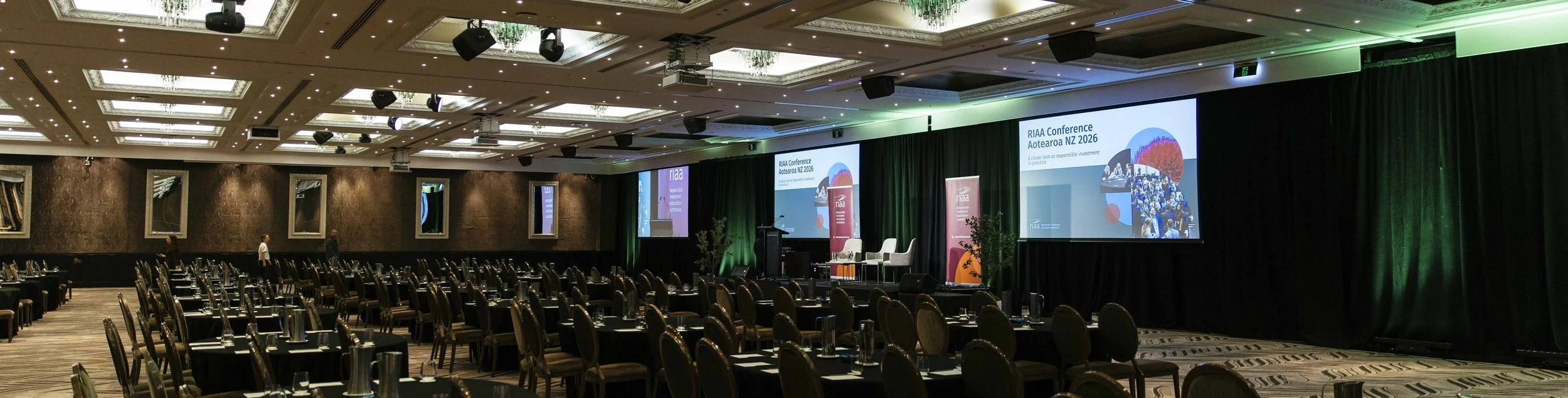
One of the things that stood out at this week’s RIAA Conference Aotearoa NZ was that not a single session had "stewardship" in its title, yet it’s hard to find one where it wasn't part of the conversation.
That's a pretty big step. Not long ago, stewardship was the specialist item on the agenda: the breakout for the people who ran voting and engagement. This year it ran through a keynote on the economy, panels on nature and modern slavery, and workshops on defence and AI. It wasn't so much a topic as a way of approaching every topic. And this is one of the clearest signs of how far stewardship practice in Aotearoa has matured.
Here's where it showed up.
Stewarding the system, not just the portfolio
The "Universal owners, universal risks" plenary used nature loss as a case study. It asked what system-level risks mean for investment strategy, governance and stewardship. As Valeria Dinershteyn of Northern Trust Asset Management put it: "we can't divest from a failing system."
NZ Super Fund CEO Jo Townsend made the same point in her keynote. A fund of its size holds "a slice of the global economy", she said, and that economy's health doesn't sit alongside returns: "it actually produces them." When you own the system, looking after the system is part of the job.
Using your voice, including with policymakers
Townsend also spoke about the value of having a voice in international forums. She described the discipline as "participating rather than assuming that somebody else is going to do it for you."
That spirit ran through the policy conversations. The modern slavery panel featured Fisher Funds' Rachel Tinkler and both National and Labour MPs. It covered both investor support for New Zealand's Modern Slavery Bill and the portfolio tools of engagement and manager selection. That support is backed by a joint statement from 32 investors and businesses representing more than NZ$324 billion. On energy, attendees noted a clear consensus on the need for strong, stable regulatory settings to attract the capital New Zealand's energy future depends on. Engaging on the rules of the game is stewardship too.
Showing your working
Mature stewardship is also about governance: being clear on how decisions are made, and ready to explain them. Townsend was candid about how the Fund responded to a High Court judgment on its sustainable investment policies earlier this year. It has created a standalone policy and procedures. They set out the standards and evidence the Fund considers, where expert judgement applies, and how responsibility and oversight are allocated.
"We expect our approach to be examined and at times challenged," she said. "That scrutiny is an important feature of a strong democracy."
When a screen isn't enough
Several of the most talked-about sessions dealt with areas where an exclusion list alone won't settle the question:
Defence, dual use and space: a workshop worked through case studies separating controversial weapons from conventional defence and dual-use technology.
Mining: the adviser stream asked whether mining can be a responsible investment, with Alphinity's Jessica Cairns explaining how managers assess mining companies.
AI: "The AI reckoning" panel looked at risks from bias and labour displacement to market concentration and energy demand, which traditional exclusion approaches may not address.
Each time, the answer pointed the same way: informed judgement, active engagement, and clear expectations of companies and managers.
What this means for stewards
Normalisation is worth celebrating. Stewardship no longer needs its own session because investors across the chain, from asset owners and managers to advisers and researchers, now treat it as part of how responsible investment gets done.
It also raises the bar. As RIAA Co-CEO Estelle Parker said in her closing address, "What matters now is what happens next." For signatories, the next step is clear: bring the system-level thinking, policy engagement and careful judgement we heard throughout the day into our own stewardship practice, and into how we tell its story.
Congratulations to Dean Hegarty, Estelle Parker and the RIAA team on a strong event.
Jackson Rowland
Director, Aotearoa New Zealand Stewardship Code